Google Turns Silicon into Gold
Facing an existential shortfall of compute for its rapidly growing services business, Google's Brain Team engineered a solution that, 10-years later, yields massive dividends.
John G T Slater, Jr
Managing Member
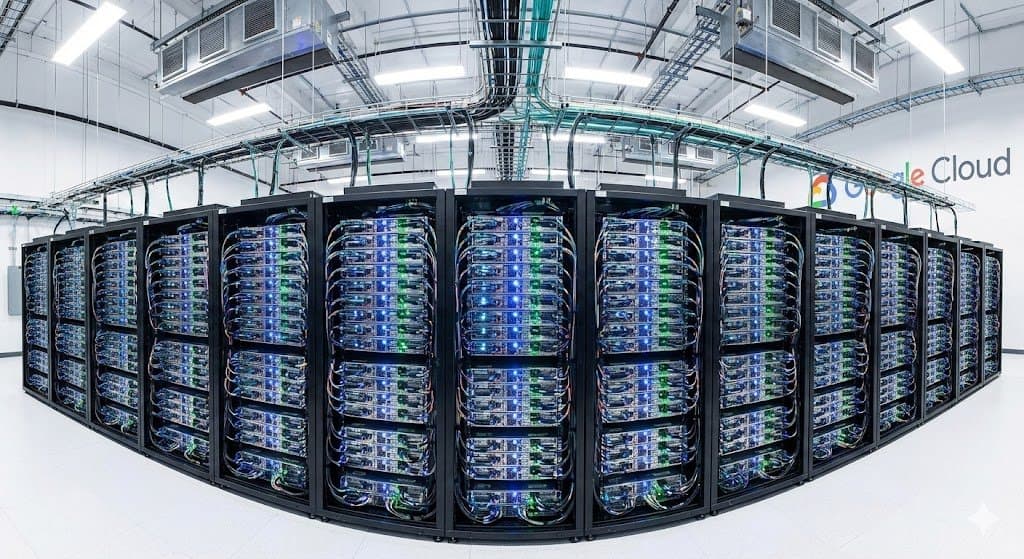
Google's TPU Revolution: From Data Center Crisis to Multi-Billion Dollar Revenue Stream
The Genesis of a Game-Changer
Around 2013, Google faced an alarming projection. If every Android user utilized voice search for just three minutes daily, the company would need to double its global data center capacity. This computational crisis sparked the development of Tensor Processing Units (TPUs), custom chips that would transform Google's AI infrastructure and create a formidable revenue opportunity.
Google's leadership, including Jeff Dean and the Google Brain team, recognized that standard CPUs and GPUs were inefficient for AI's heavy matrix multiplication workloads. Scaling with existing hardware would have been financially devastating. The solution was purpose-built silicon: an application-specific integrated circuit designed exclusively for neural network operations.
Technical Superiority Through Specialization
TPUs distinguish themselves through their systolic array architecture, which fundamentally differs from GPUs. While graphics processors carry "architectural baggage" from their gaming origins—spending energy on caching, branch prediction, and thread management—TPUs streamline everything for AI calculations. Data flows through the chip like blood through a heart, eliminating the constant memory shuffling that creates bottlenecks in traditional processors.
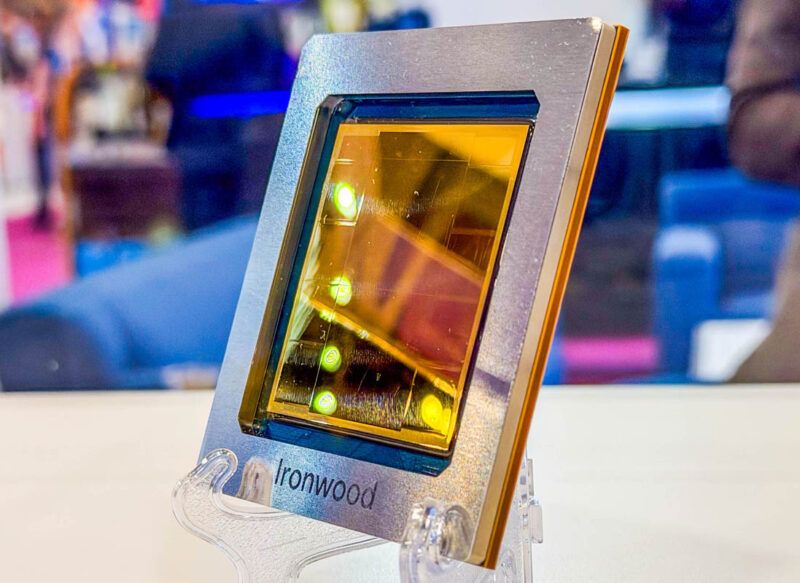
This efficiency translates to impressive performance gains. The latest Ironwood (TPU v7) delivers over four times better performance than its predecessor and achieves 100% better performance per watt than the Trillium generation. Google can deploy up to 9,216 chips in a superpod, accessing 1.77 petabytes of shared memory—computational muscle that enables training models like Gemini at unprecedented scale.
Revenue Model: Cloud Services, Not Hardware Sales
Unlike Nvidia, Google doesn't sell TPUs as standalone hardware. Instead, it monetizes through Google Cloud Platform, offering TPU access as a premium service. This strategy is paying off handsomely. Industry estimates suggest TPU operations generated approximately $11.25 billion in revenue for 2025, with projections of 2.5 million chip shipments. Google Cloud revenue jumped 34% year-over-year to $15.15 billion in Q3, with company leadership attributing substantial demand to TPU-based infrastructure. The backlog reached $155 billion, signaling strong future demand. Major customers like Anthropic have committed to massive TPU deployments—up to one million chips in deals worth tens of billions of dollars.
Strategic Advantages and Market Position
Broadcom, Google's manufacturing partner, has become the second-largest AI chip company by revenue behind Nvidia, driven primarily by TPU production. Google's partnership with Broadcom generates billions annually while maintaining a 58% market share in custom cloud AI accelerators.
The competitive advantage extends beyond performance. By controlling hardware development, Google escapes Nvidia's 75% gross margins, potentially restoring cloud business margins from 20-35% back toward 50-70%. This vertical integration—where DeepMind researchers directly influence chip design—creates a feedback loop competitors relying on external vendors cannot match.
As AI shifts from training to inference workloads, Google's decade-long TPU investment positions the company uniquely. The infrastructure that once solved a capacity crisis now drives cloud growth and establishes Google as a formidable challenger to Nvidia's dominance.
Tags
Disclaimer: CUBIC Advisors and its clients may hold positions in, and may trade, securities of companies discussed in these blog posts. The information provided is for educational and informational purposes only and should not be construed as financial, investment, retirement, tax, or legal advice. Readers should consult with their own qualified advisors before making any financial decisions. Past performance does not guarantee future results.